WASHINGTON FRUIT & PRODUCE CO.
Yakima, WA
-
Architect: Graham Baba Architects
Contractor: Artisan Construction
Structural Engineer: MA Wright, LLC
MEP Engineer: Arup
Landscape Architect: The Berger Partnership
Lighting Design: Brian Hood Lighting
Photography: Kevin Scott -
2018 AIA National Honor Award
2018 German Design Award
2018 German Design Awards - Short-Listed
2018 International Design Award - New Commercial Building
2018 The Plan Award - Office & Business
2018 WAN Awards Best in Americas - Commercial
2018 Wood Design & Building Honor Award
2018 WoodWorks Wood Design Award - Low Rise Commercial
2017 Architizer A+ Award - Jury & Popular Winner
2017 Chicago Athenaeum American Architecture Award
2017 Gray Award for Commercial Architecture
2016 AIA Northwest & Pacific Region Honor Award
2016 AIA Seattle Merit Award
2016 Architects Newspaper Best of the West Honorable Mention
2016 WA American Society of Landscape Architects - Merit Award
2016 WAN Awards, Commercial - Short-Listed
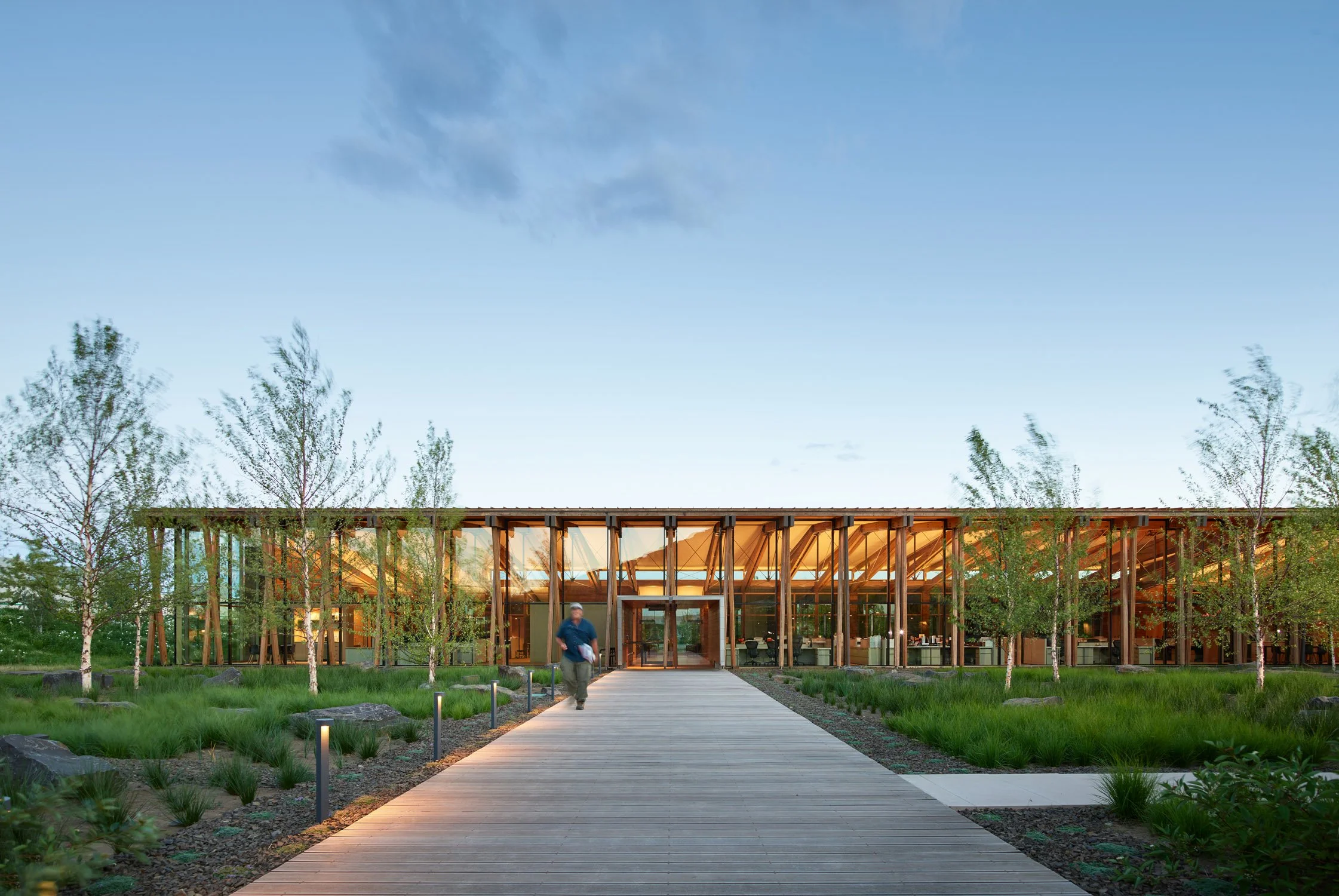
A reclaimed barn reimagined, the design creates an inward-focused sanctuary, where natural materials and filtered daylight reclaim the site from the surrounding agricultural typology.
Agriculture is the dominating influence in Yakima, where good volcanic soil, sunny days, and irrigation from the Yakima River support the area’s many fruit orchards. The area is a leader nationally in value of agricultural products sold. Washington Fruit, family owned and operated since 1916, grows, packs and ships premium fruit products from the northwest throughout the world. The company’s facilities occupy 90 acres of industrial land, including some of the most advanced sorting and packing equipment in existence.
The project is located on flat, river-bed industrial land bordered by a major freeway. The fruit processing facilities that dominate the area are concrete tilt-up boxes, surrounded by acres of pavement, trucks and refrigeration equipment. Company leaders desired a new office/headquarters that would serve as a refuge from the industrial agribusiness landscape. They asked for warmer materials, little to no concrete, non-boxlike forms, protection from the freeway, and minimal visible equipment or devices. Light and acoustics were high priorities.
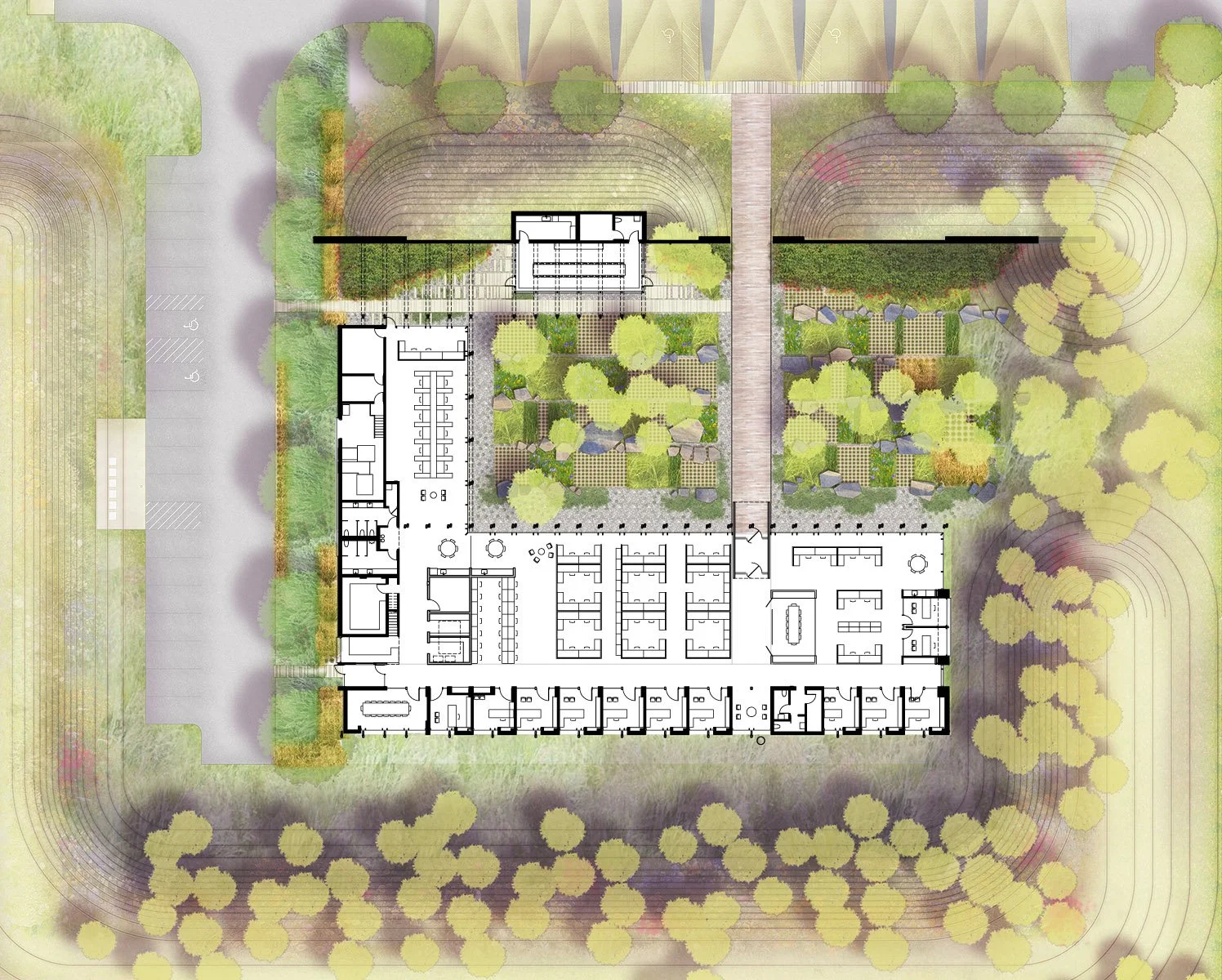
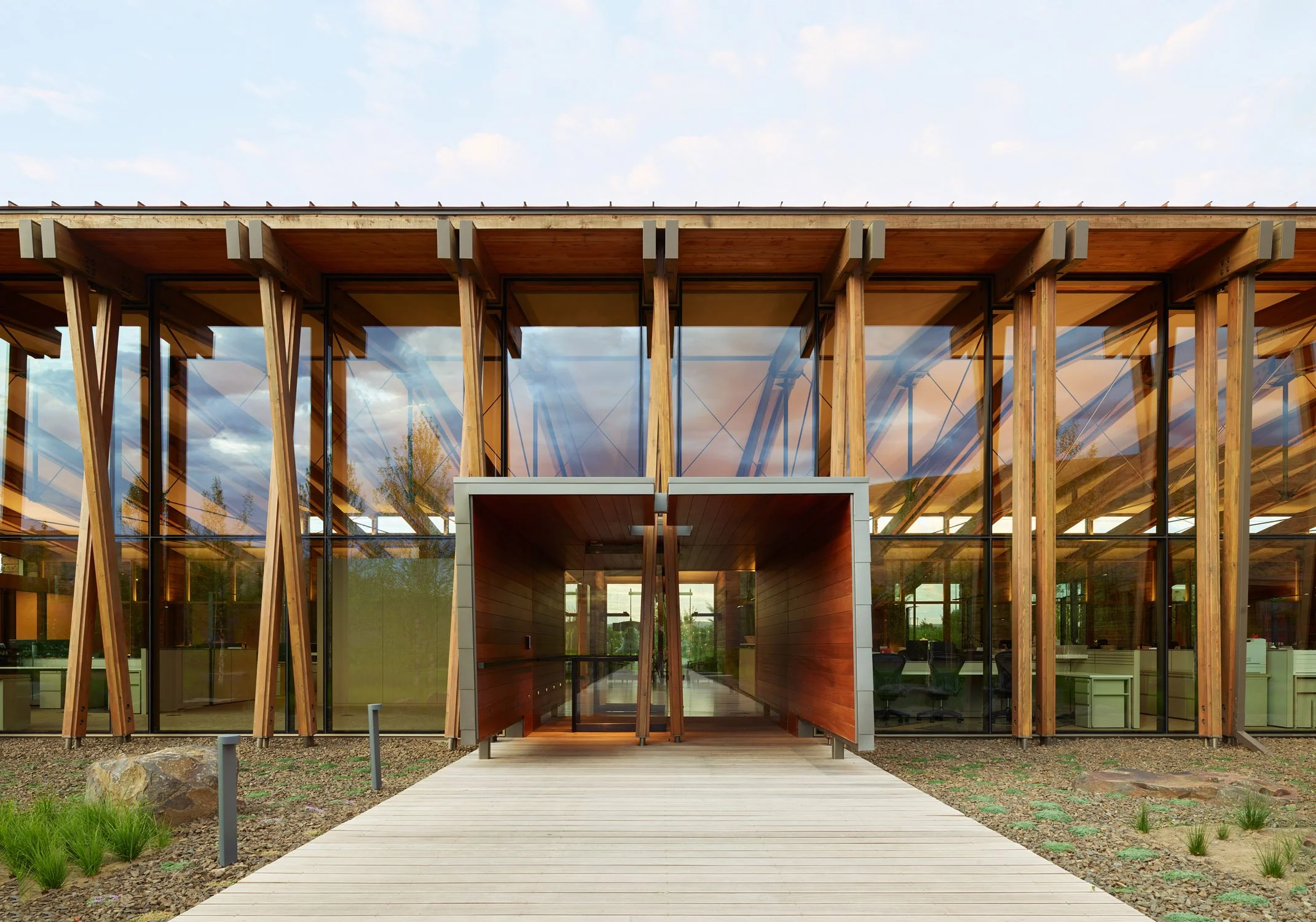
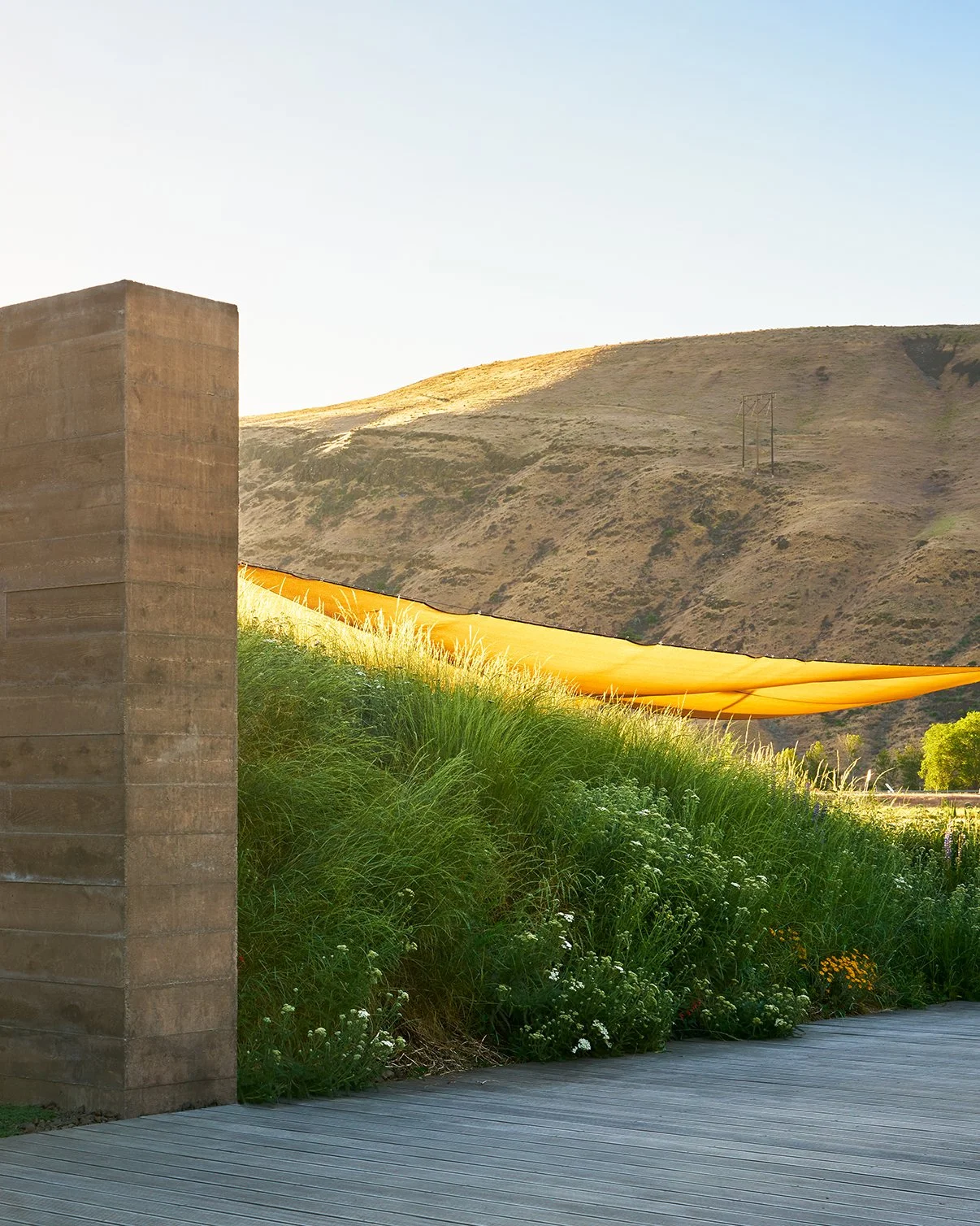
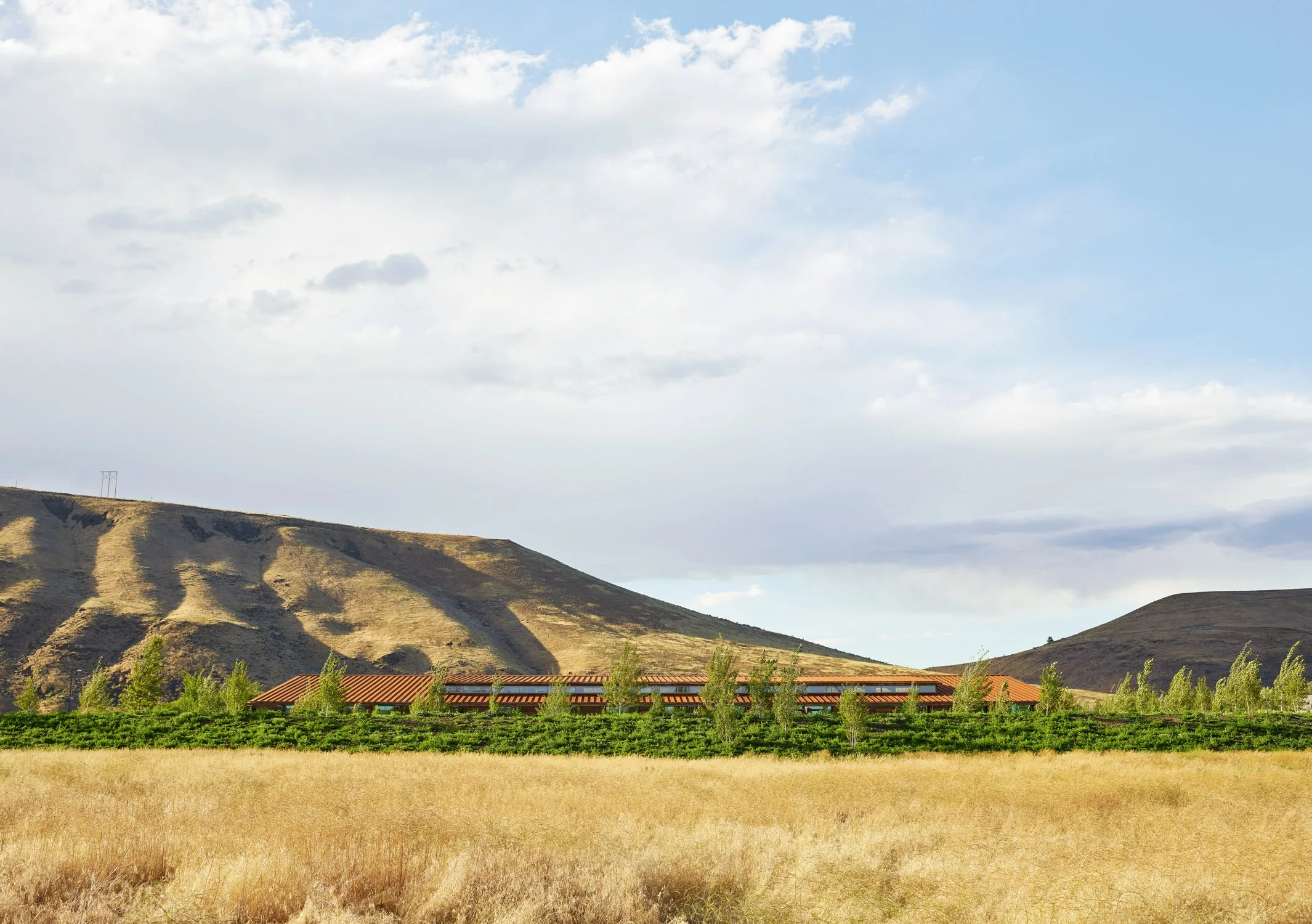
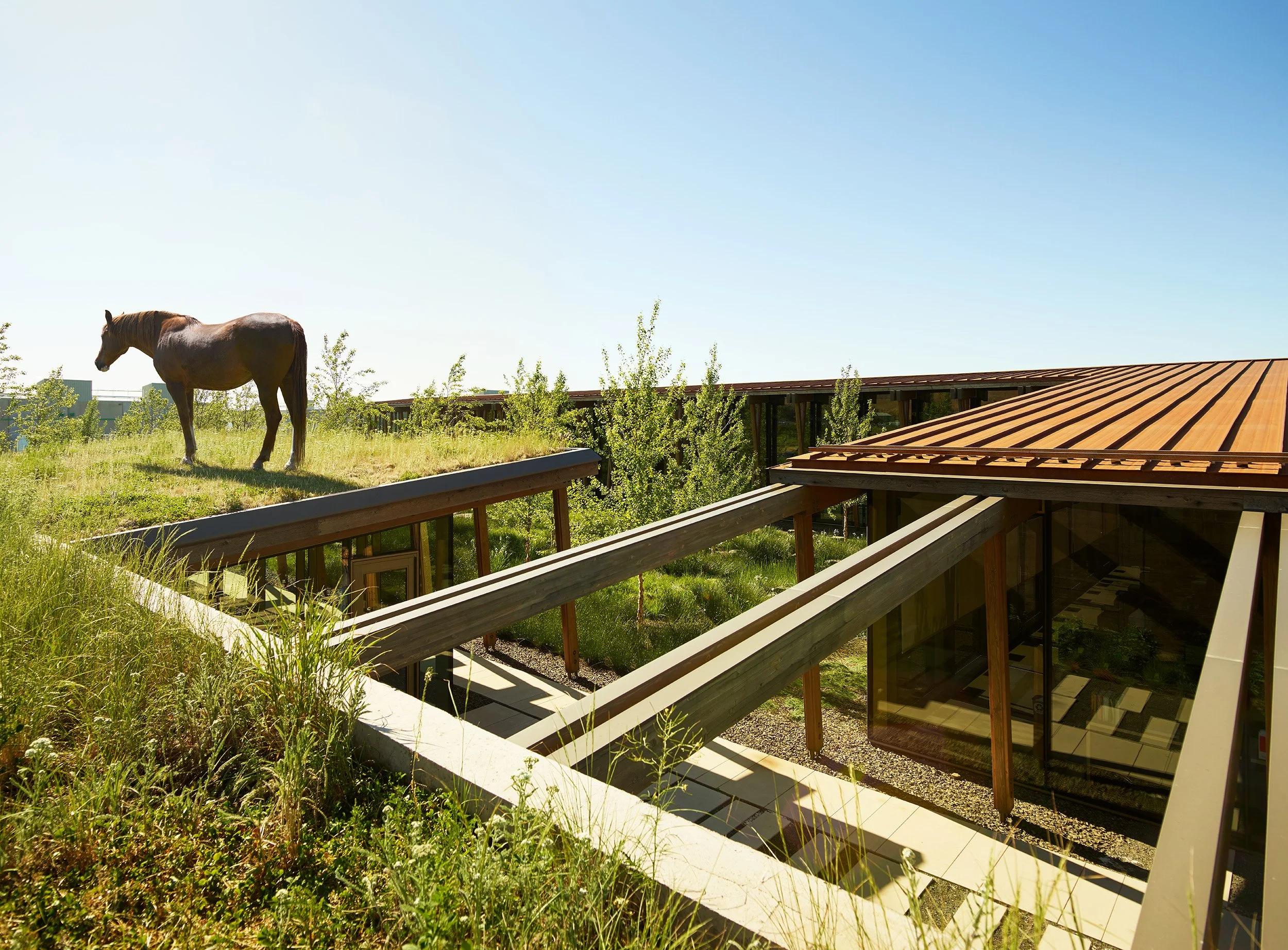
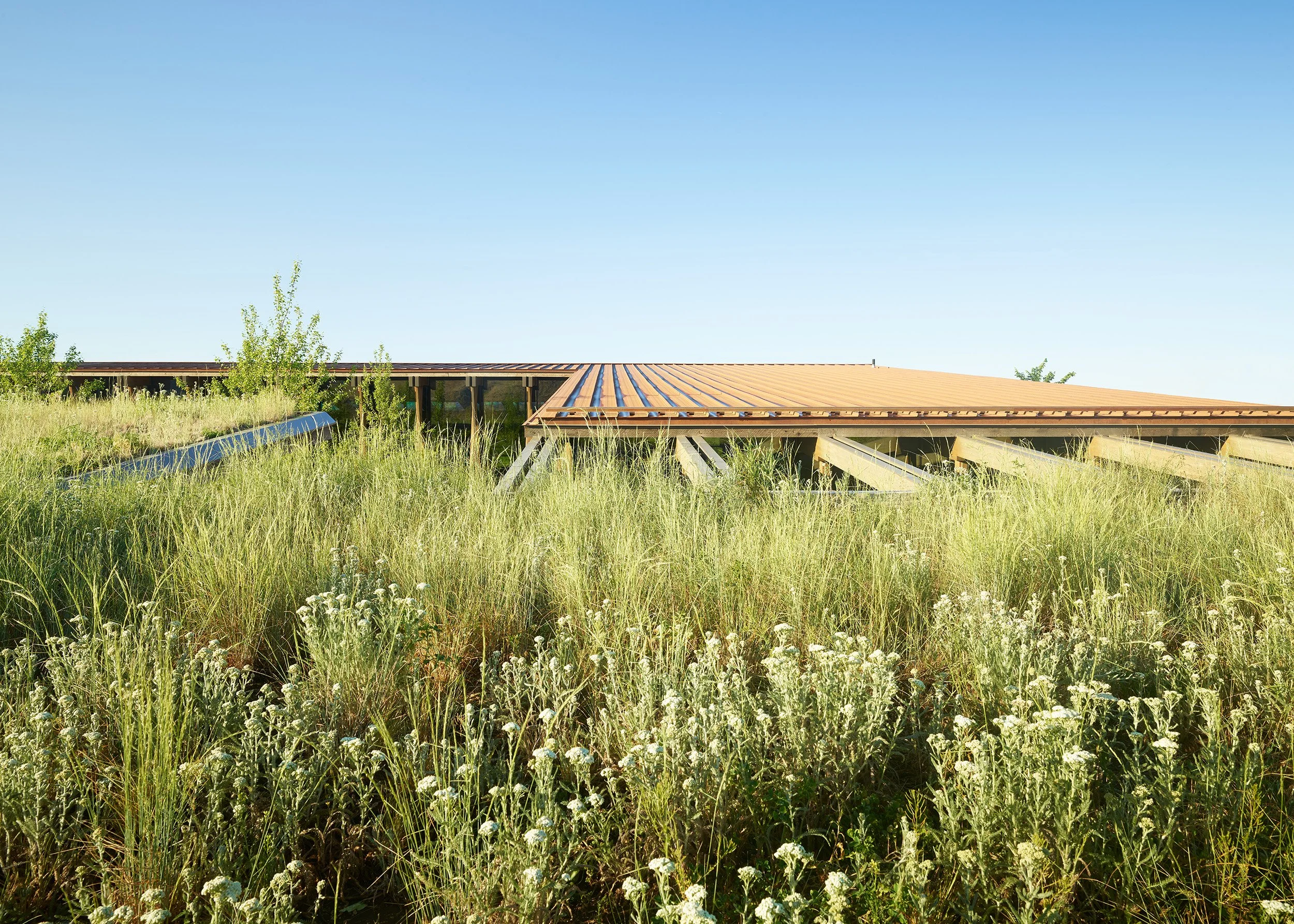
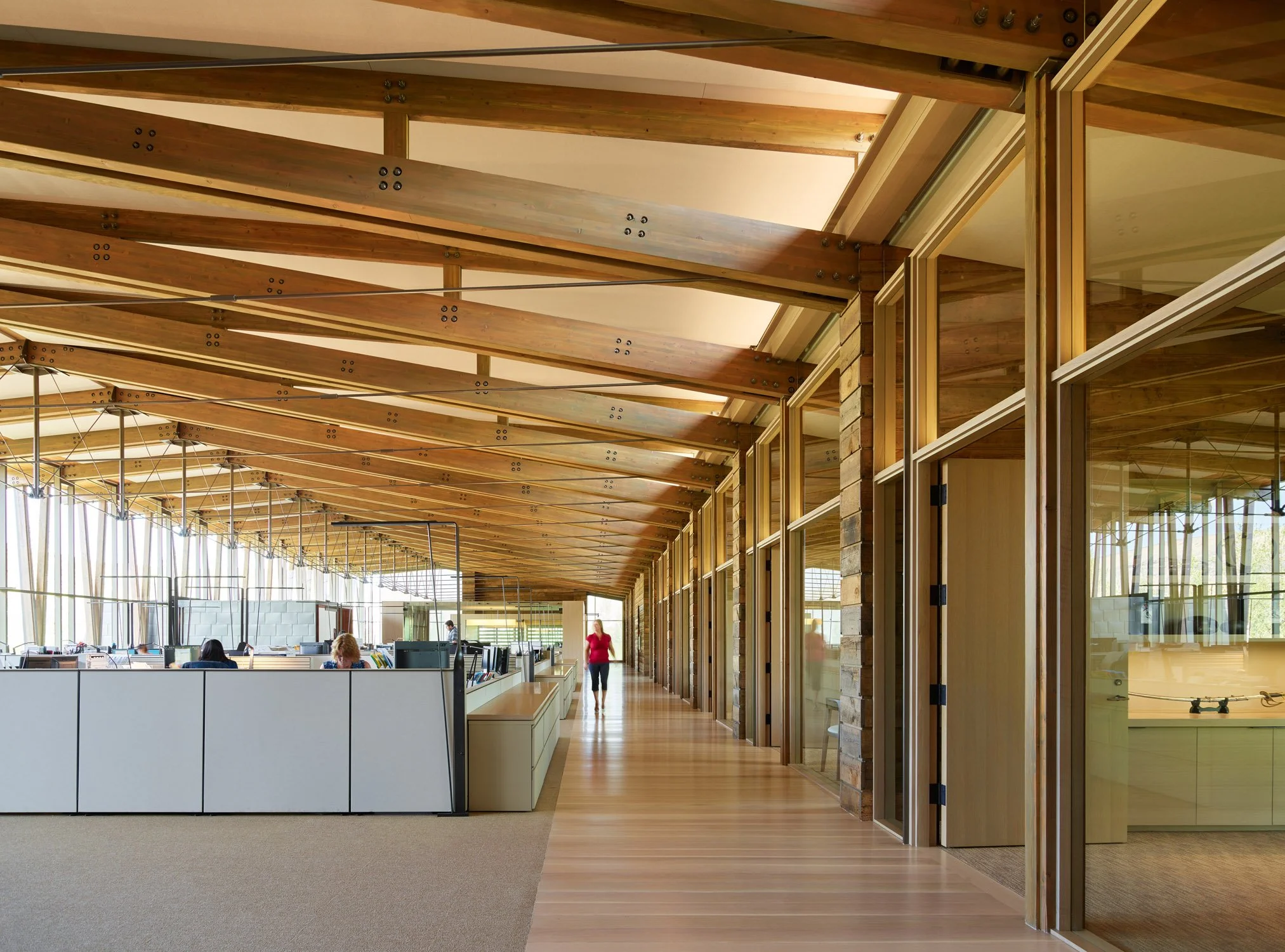
The approach for the new office was to create an inwardly focused oasis. The building is surrounded by earth berms and a site wall placed so that views out are directed upward toward the basalt hills and the foreground of freeways and industrial agribusiness are obscured. At the heart of the place is a landscaped courtyard onto which most of the project’s occupied spaces are oriented.
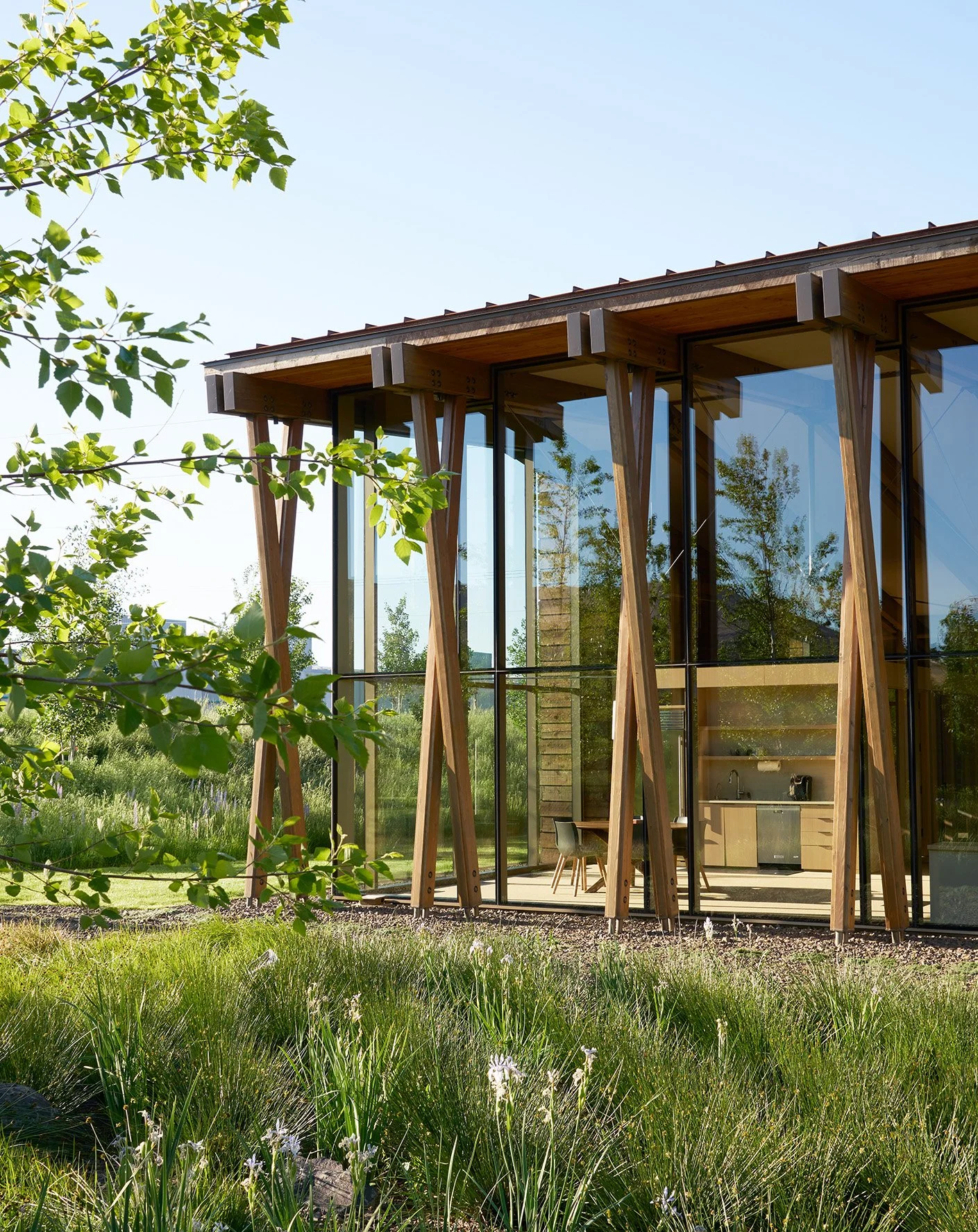
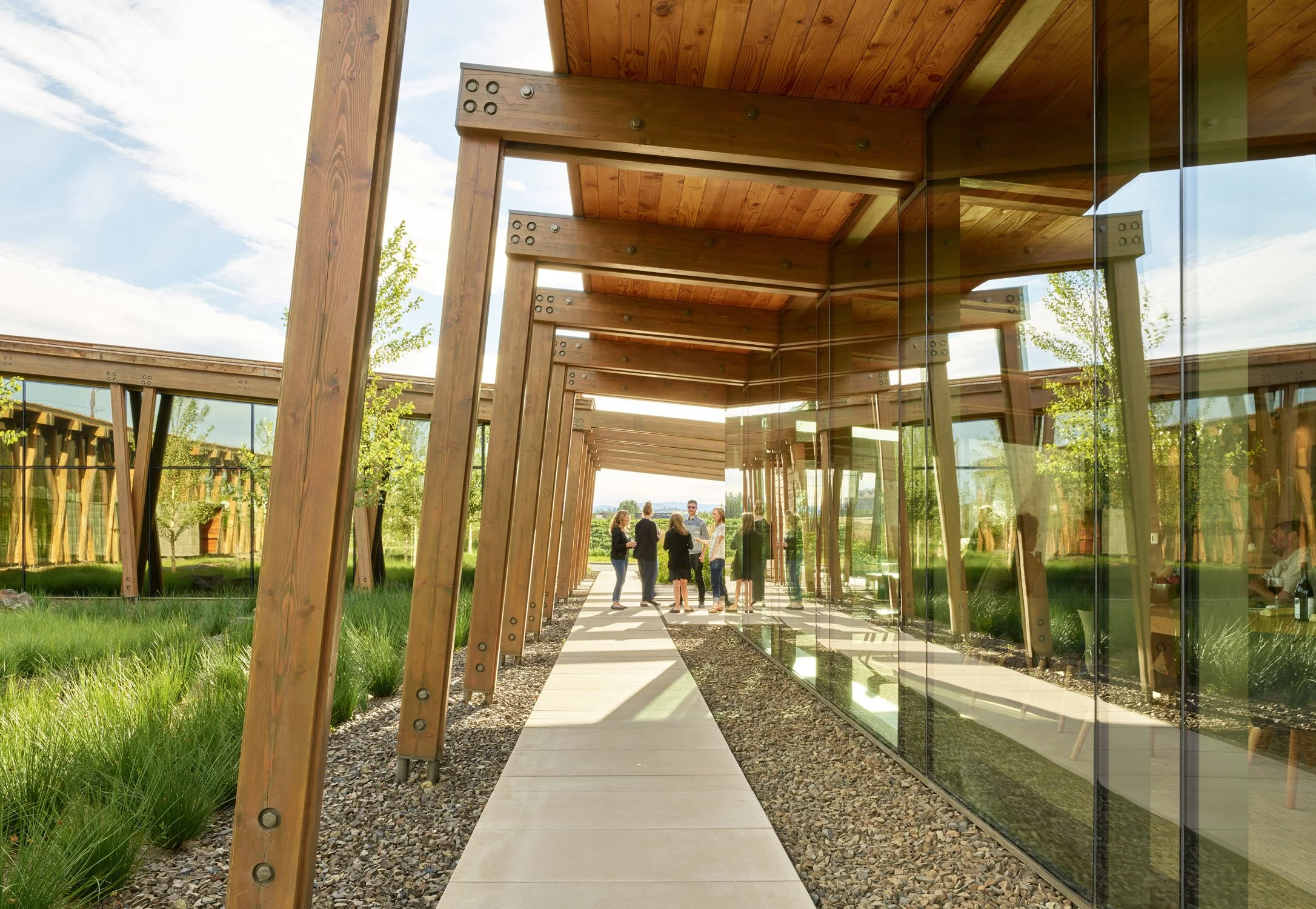
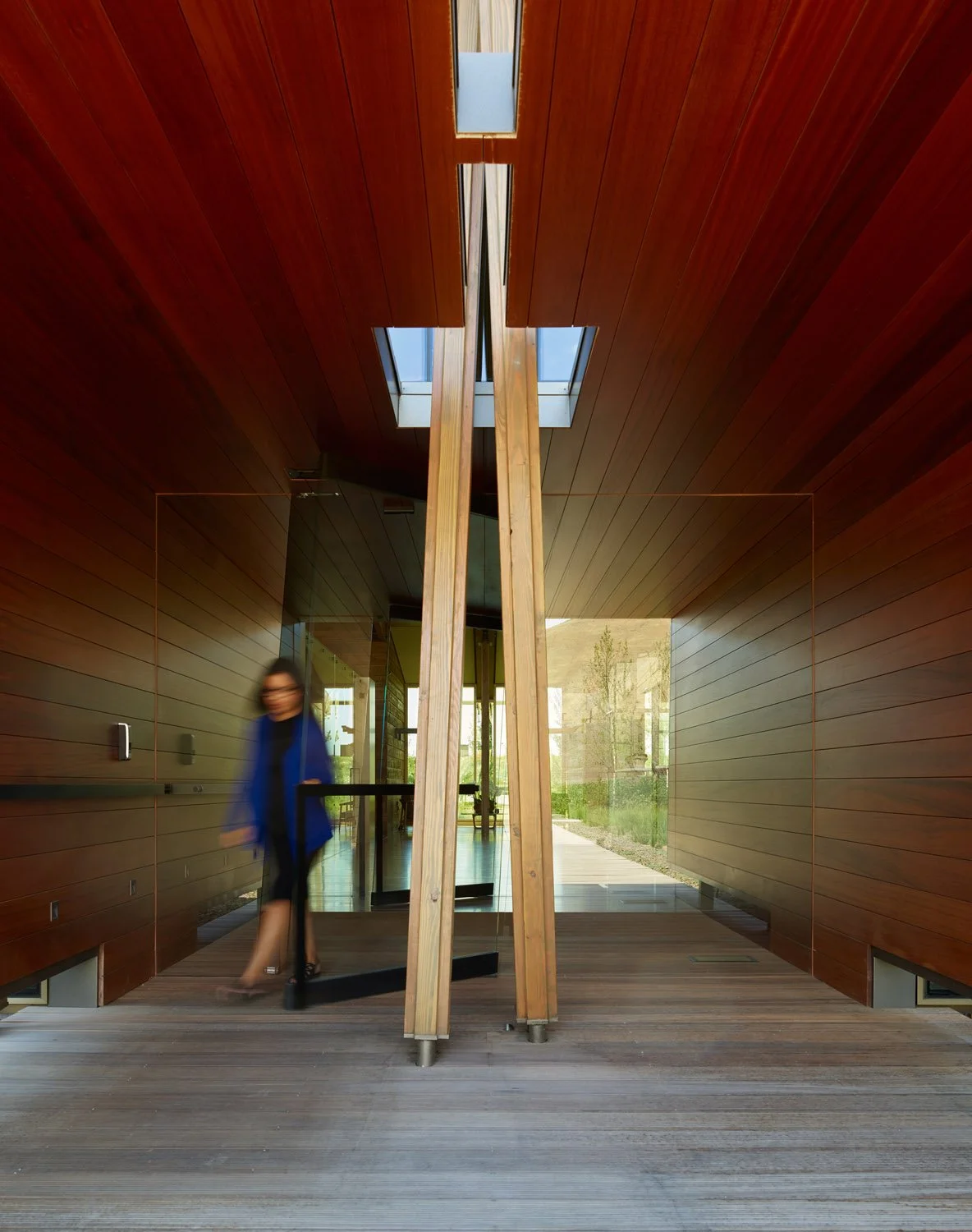
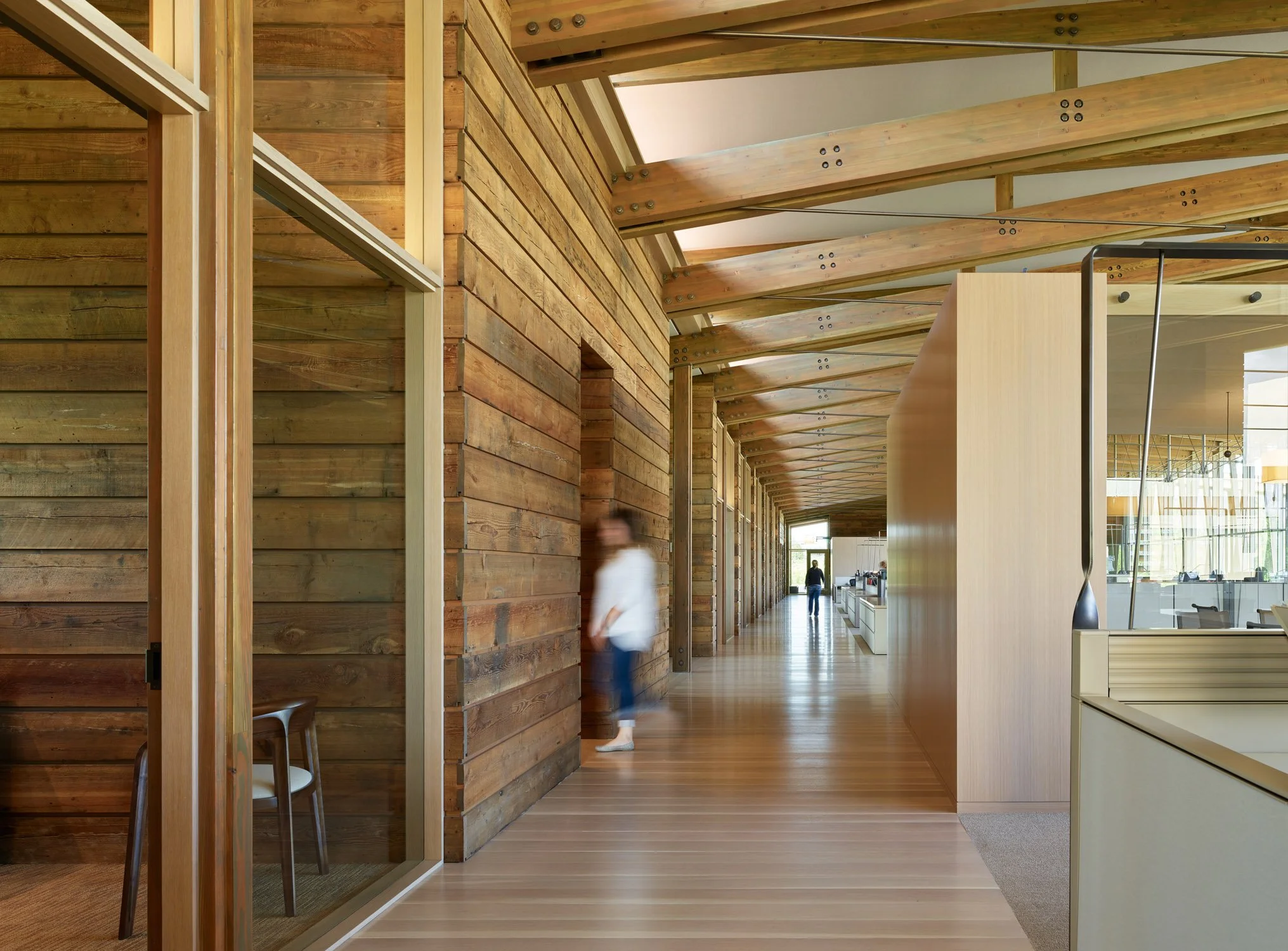
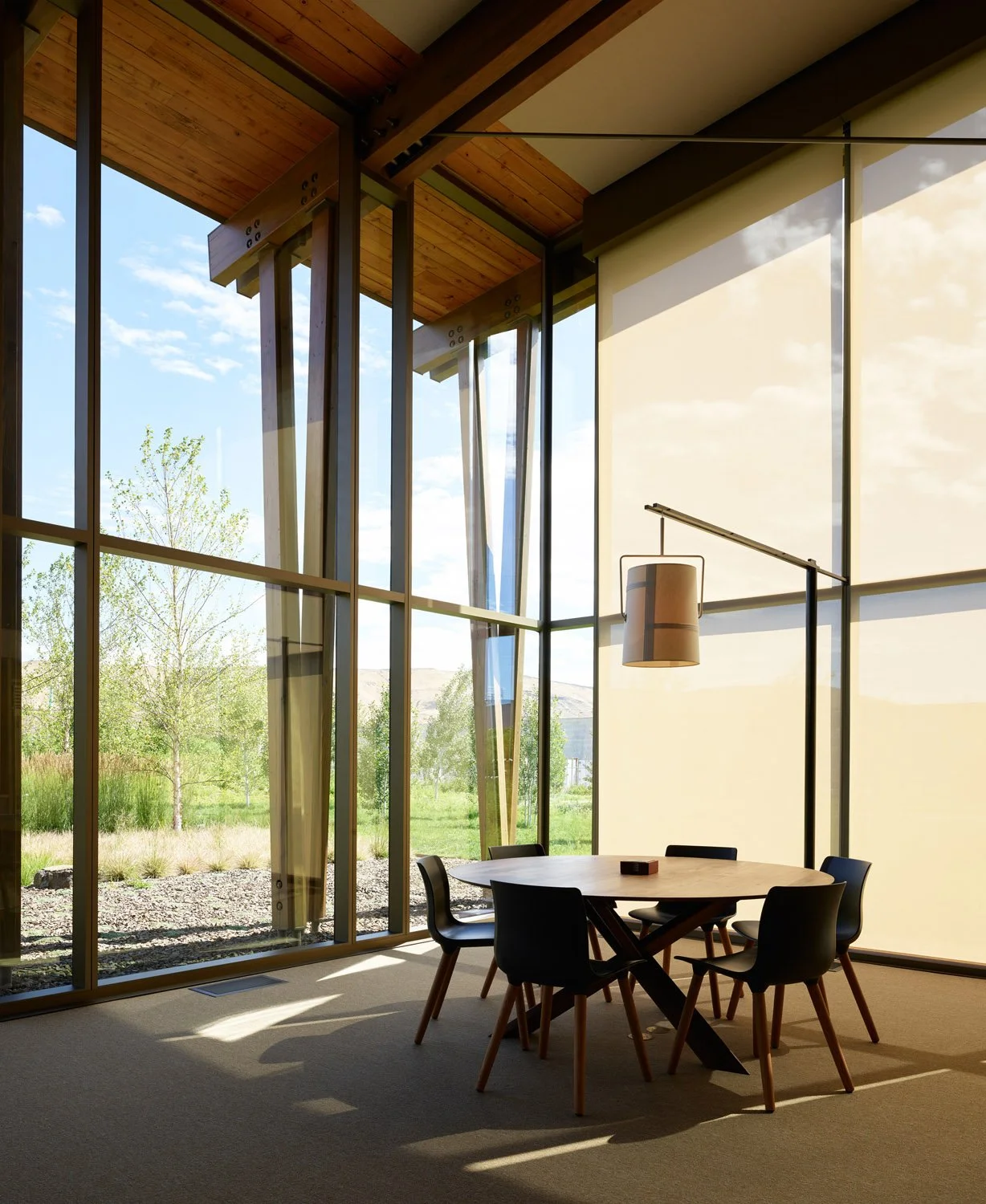
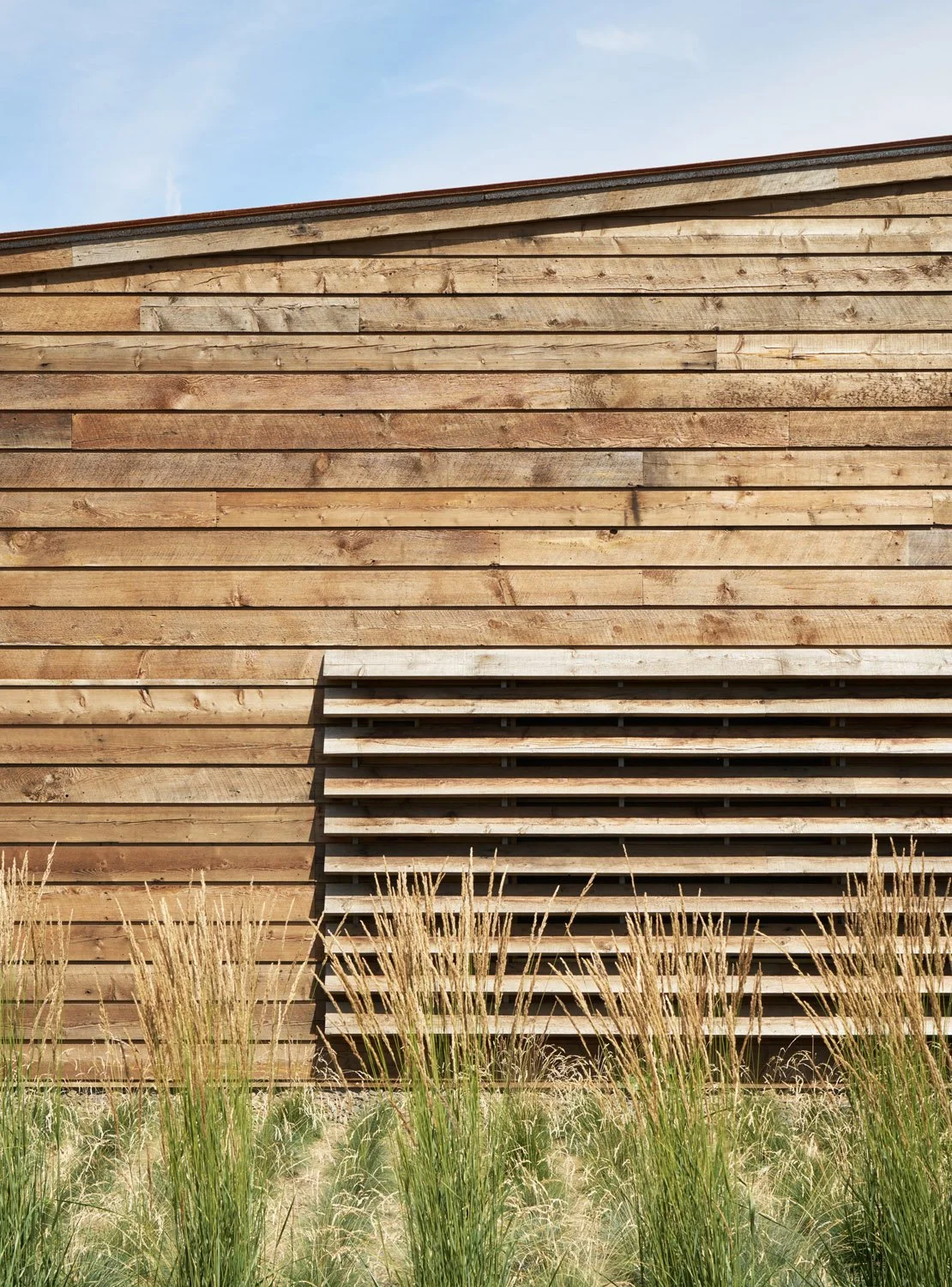
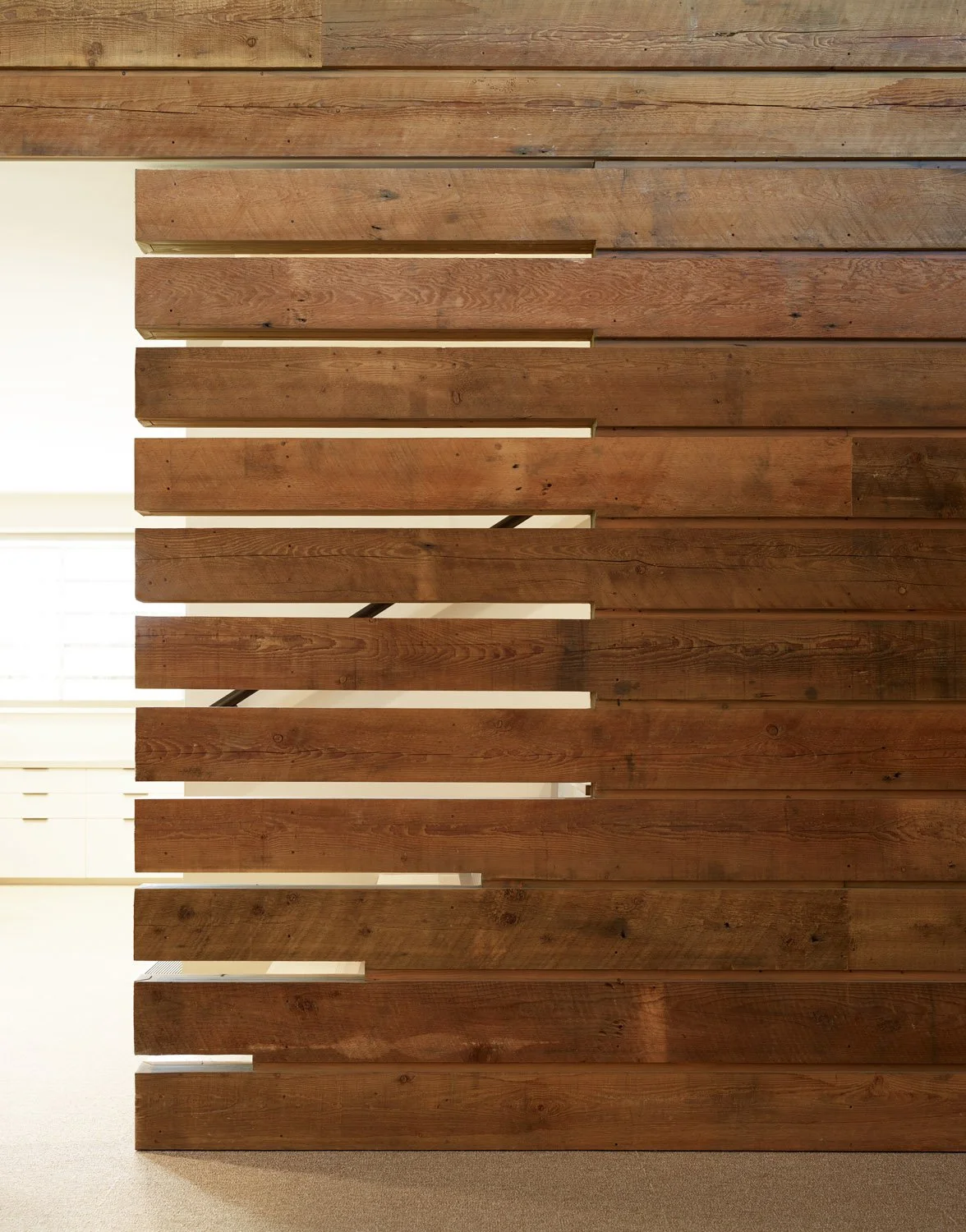
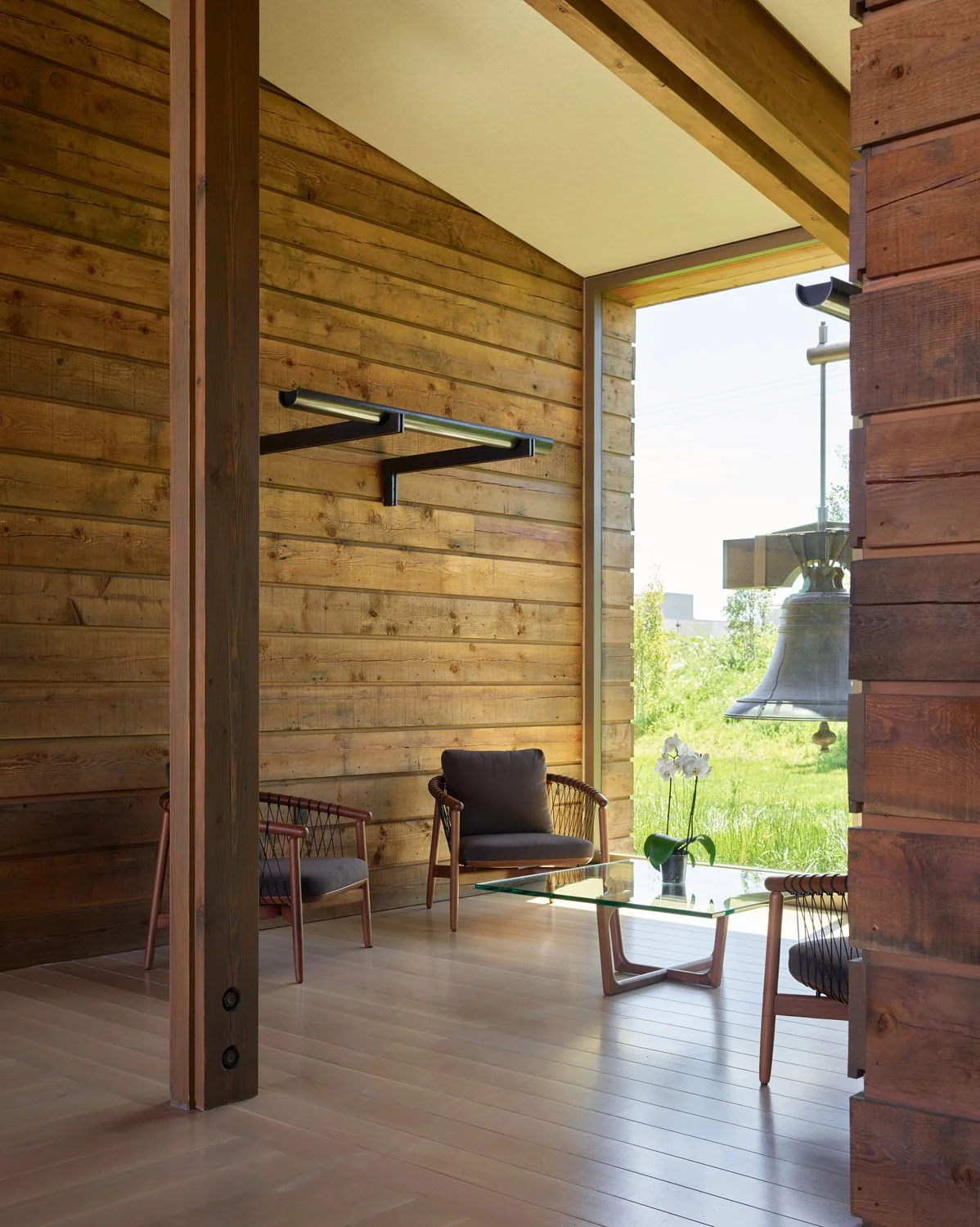
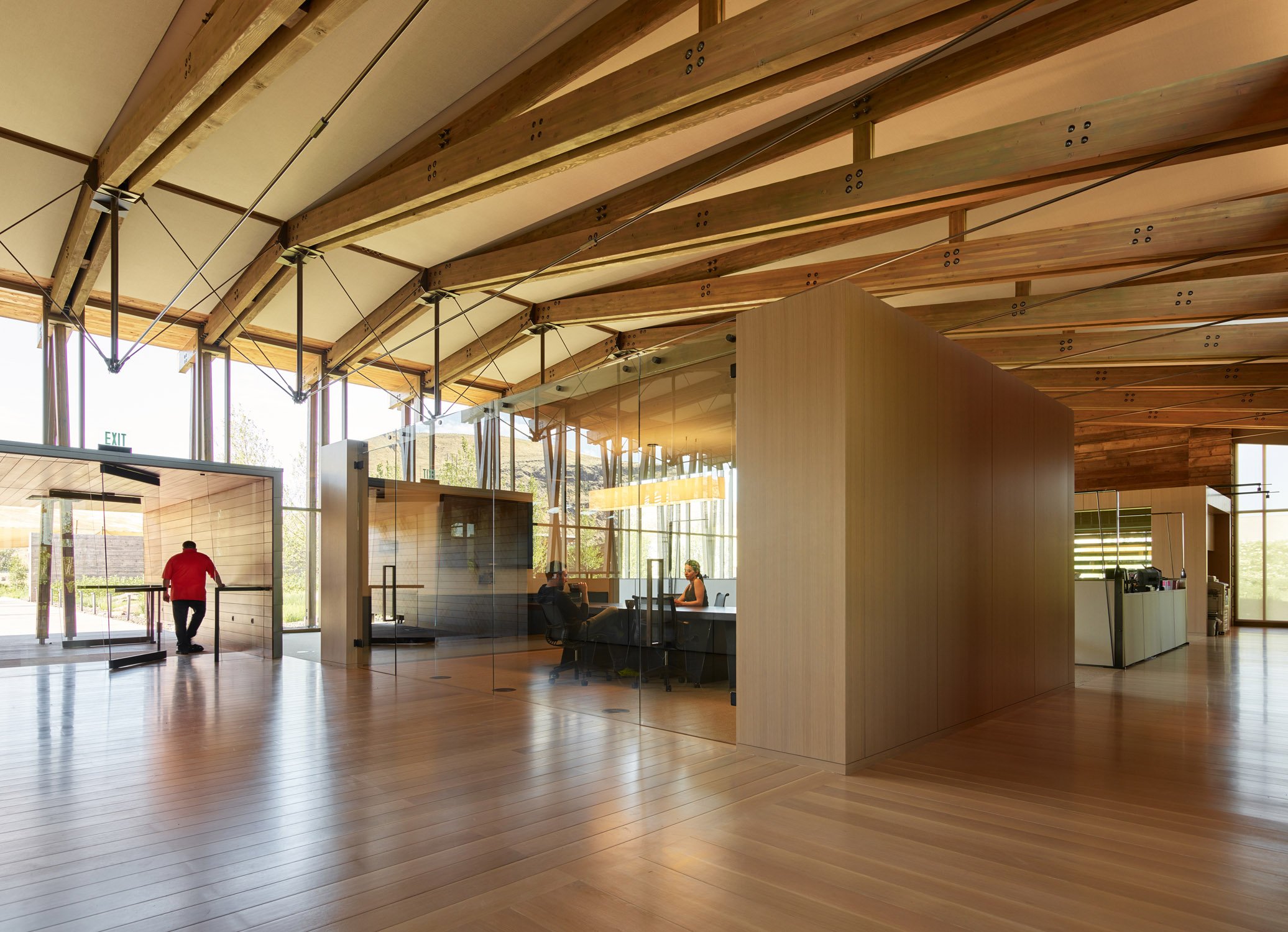
An abandoned wood barn was the single architectural reference given to the design team. The barn’s diagonal structural members were exposed and the remaining wood siding was deeply weathered. It provided a metaphor for the new building. It is imagined as a barn in some state of decay and nature in the process of reclamation. Parts of the simple gable form have been “removed” or lost. In those places glass is exposed and trees and grass are taking over. The structure is “exposed” and expressed as diagonals. Accordingly, columns are sloped and twisted. The outer shell is clad in reclaimed barnwood from nearby sources.
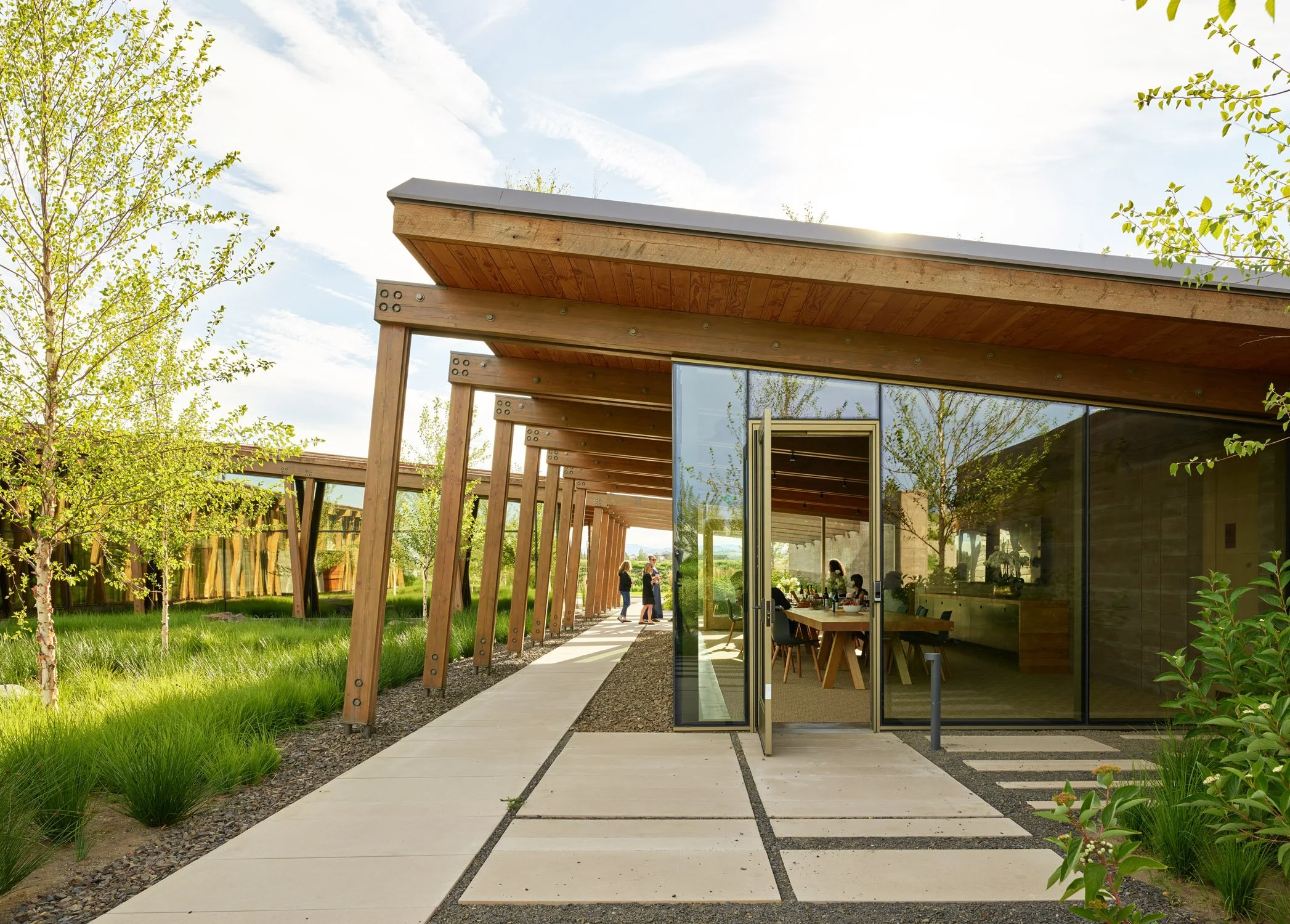
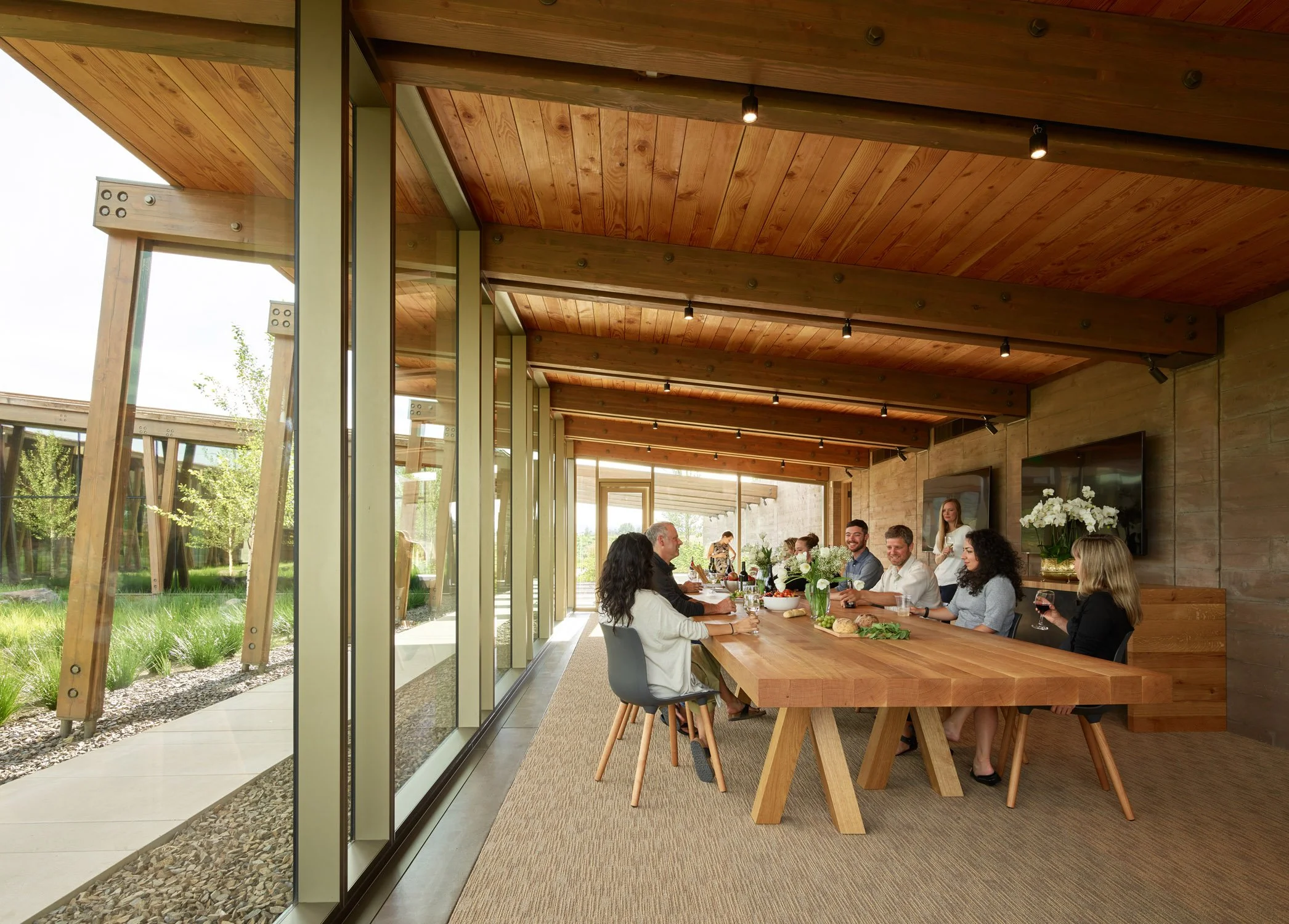
The lunchroom, which includes a kitchen and table for 30, provides a gathering space for weekly meals when field staff come in from the orchards. The event allows the people who grow the fruit to mingle with those who sell it.
Site planning to minimize heat gain and need for electric lighting was the main sustainability strategy. The best plan option was to orient the glazing north and some east. With back-of-house program kept to the west edge to block low west sun, the resulting “L” plan orients views to the north. Yakima averages 290 sunny days/year so the tall window wall almost eliminates the need for electric lighting. There is a south-facing clerestory to balance daylight. Photocells balance the light on darker days. Deciduous trees are densely planted at south windows of the lunchroom and executive offices.